What "As-Is" Means When You Sell a Chattanooga House to Us
Plenty of Chattanooga listings say "sold as-is." That rarely holds once a financed buyer shows up. Their inspector still crawls under the house, their agent still sends a repair addendum, and the lender's appraiser can still make a soft subfloor a condition of the loan. If nobody agrees on who fixes what, the deal ends and the house goes back on the market.
Our version is simpler. Dignity Properties walks through once, prices the home in today's shape, and buys it that way. No inspection contingency, no repair list, and no bank that can back out over a cracked block wall in a Brainerd basement.
On paperwork, the Tennessee Residential Property Disclosure Act lets most sellers either complete the state disclosure form or sign a disclaimer statement where the buyer accepts the property as it stands. Some transfers are exempt, such as a home the owner has not lived in at any time in the last three years. Your closing attorney or title company can confirm which applies.
Problems We Regularly Buy Through in Hamilton County
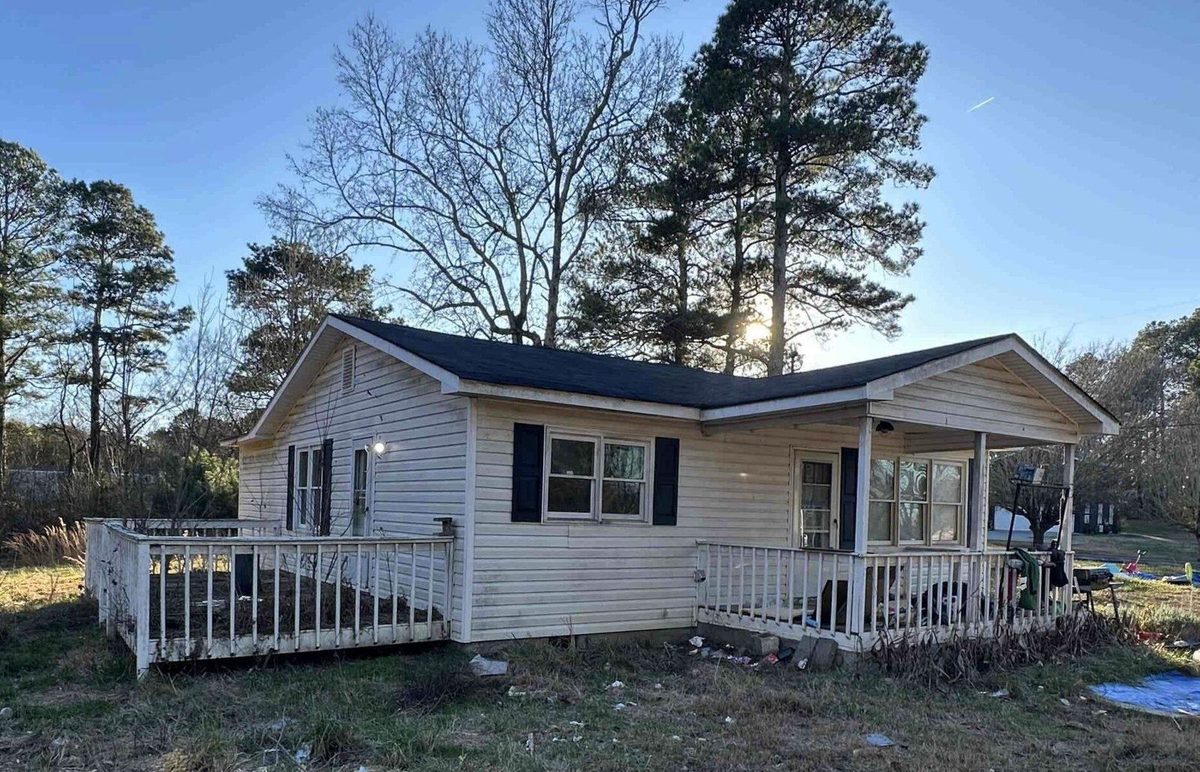
If a house is standing, we are probably interested. Conditions we see from Highland Park and St. Elmo bungalows to ranch homes in East Ridge, Red Bank and Hixson:
- Moisture and mold: Crawl spaces that stay damp, stained drywall, musty basements. Remediation is priced in and handled after closing.
- Fire or smoke: A scorched kitchen or a home that is mostly gutted.
- Water intrusion: Burst supply lines, leaking roofs, or water that came in during a heavy Tennessee River valley storm.
- Settling and structure: Sloping floors, cracked block, rotted sills or failing piers. Common on Chattanooga's hillside lots.
- Worn-out roofs: Missing shingles, tarps, active drips or decking that needs to be replaced.
- Code trouble: Open city cases, unpermitted additions or a garage turned into a bedroom without a permit.
- Too much stuff: Rooms full to the ceiling. Leave it; we clear it.
- Old systems: Fuse boxes, knob-and-tube wiring, galvanized plumbing, a dead furnace or an AC unit that quit in July.
- Neglect and break-ins: Missing copper, boarded windows, interiors that were stripped while the house sat empty.
- Condemned homes: Depending on the details, we can still buy a property the city has posted.
Why Repair Bids Surprise So Many Chattanooga Owners
Good tradespeople around Chattanooga stay booked, and a weekend project often comes back as a five-figure bid once a contractor opens a wall. Rough ranges we use when pricing a typical 2,000 square foot home:
- Roof tear-off and replacement: about $12,000 to $22,000
- New heating and cooling system: about $8,000 to $14,000
- Moderate mold cleanup: about $5,000 to $20,000
- Pier or foundation work: $8,000 and up, sometimes past $30,000
- Mid-level kitchen redo: about $30,000 to $60,000
- Panel upgrade with rewiring: about $8,000 to $20,000
- Rebuilding after a serious fire: $30,000 to well over $150,000
Once a house needs that kind of money, retail buyers get scarce. FHA, VA and USDA loans carry minimum property standards, and an appraiser who sees peeling paint or a dead furnace can hold up the loan. That leaves mostly cash buyers and investors anyway.
What a Traditional Listing Costs on a House That Needs Work
On a home with problems, sellers give up money in places they did not plan for:
- Agent commission, often 5 to 6 percent of the price ($12,500 to $15,000 on a $250,000 sale)
- Credits or repairs demanded after the buyer's inspection, commonly 1 to 3 percent of the price
- Two or three months of mortgage, insurance, utilities and Hamilton County and city property taxes while the house sits
- Cleaning, small fixes and staging to make it show
- The risk of starting over if the buyer's loan or inspection falls apart
Add those up and a cash sale often nets about the same, sometimes more, without months of waiting.
How We Arrive at Our Offer
We start with what renovated homes near yours have actually sold for in Hamilton County. Then we subtract our honest estimate of the repairs, the cost to hold and resell the house, closing costs and a reasonable margin. Here is a simple example: a house worth $300,000 after a full renovation that needs $60,000 of work would likely see an offer somewhere between $200,000 and $230,000.
Ask and we will show you every line of that math.