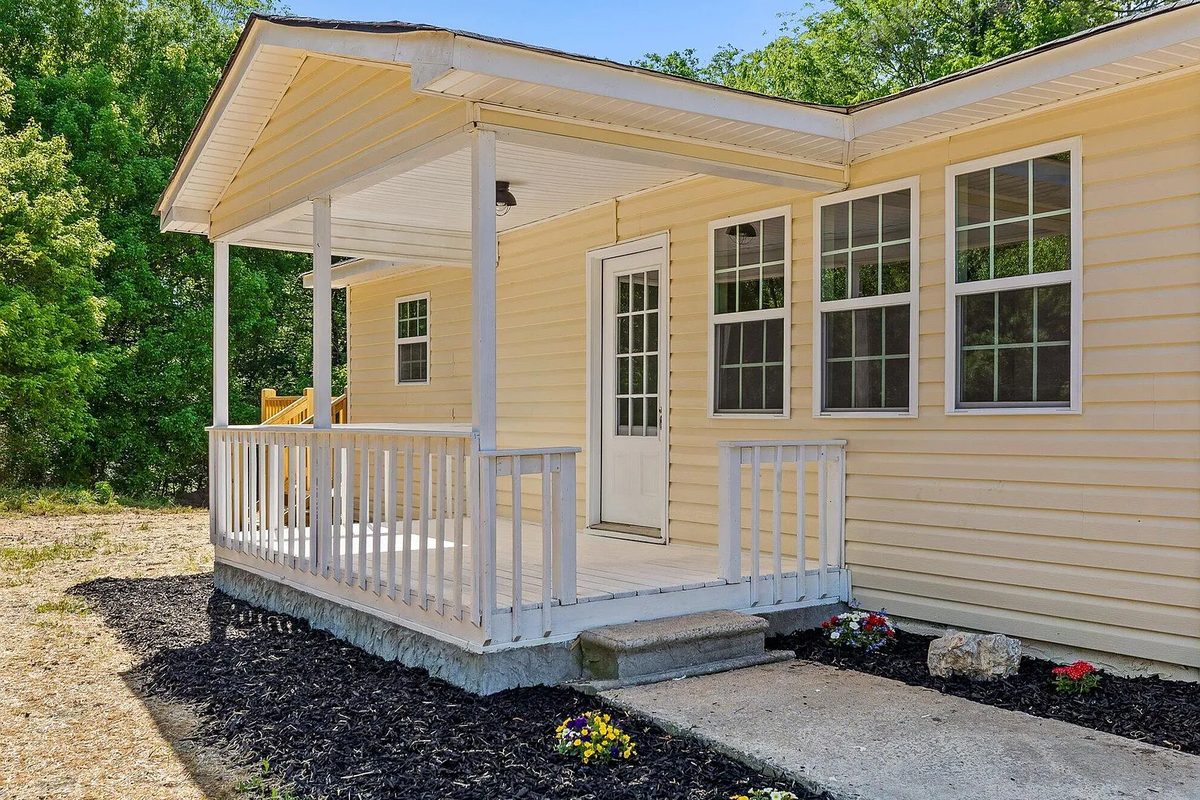
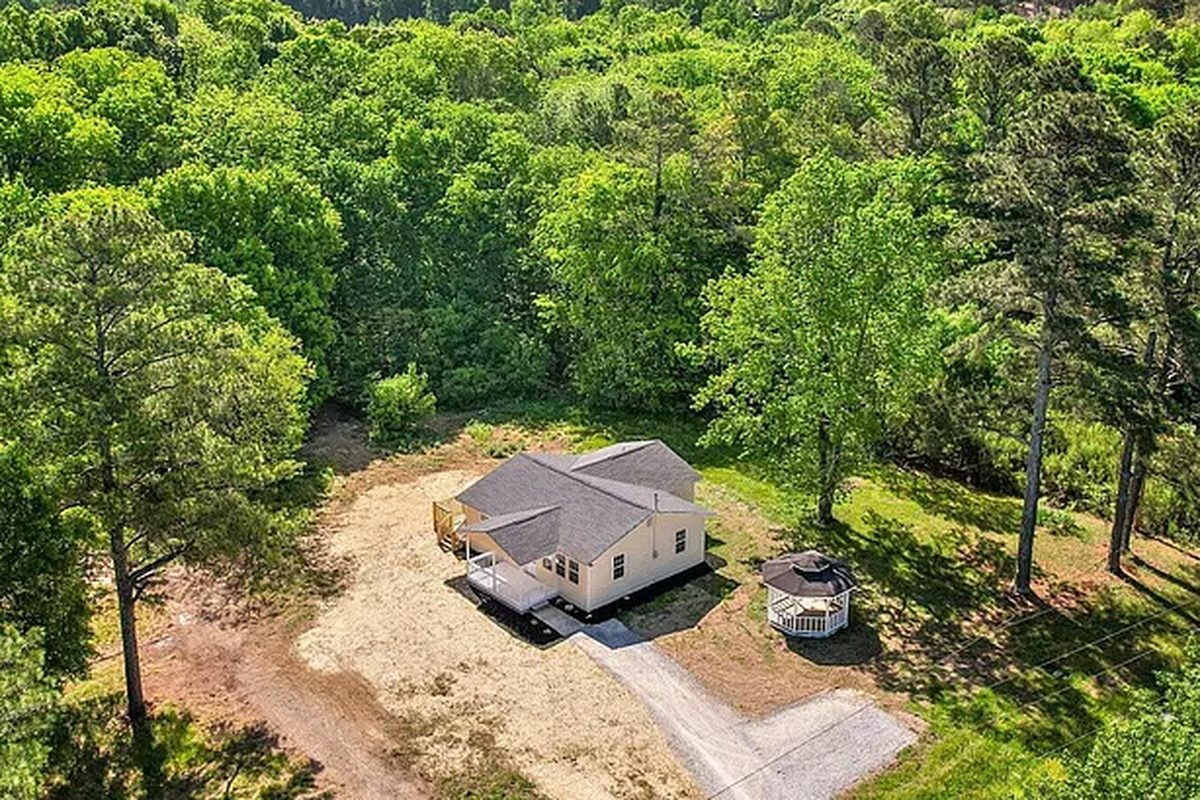
Nothing about your house changed. The line on the map did.
On November 28, 2025, revised FEMA Flood Insurance Rate Maps took effect across Hamilton County. Some Chattanooga properties that had never been in a mapped flood zone are now inside one, and their owners found out the way most people find out — from an insurance agent, a lender, or a neighbor. If you are thinking about selling one of those houses, the map change is not a paperwork problem. It reaches into what you have to disclose, which buyers can get a loan, what their monthly payment looks like, and how long the whole thing takes.
This guide walks through what the new maps did, what Tennessee law actually requires of you as a seller, and the handful of moves that keep a flood-zone sale from falling apart at underwriting.
Flood zones are parcel-specific and the rules around them are federal, state and local all at once. Use this to know which questions to ask, then confirm your own property with the City of Chattanooga's Land Development Office, your insurance agent, and a Tennessee real estate attorney before you sign anything.
What Actually Changed on November 28, 2025
FEMA periodically redraws the Flood Insurance Rate Maps — the FIRMs — that define which parcels sit inside a Special Flood Hazard Area, the area with a 1% annual chance of flooding that most people still call the "100-year floodplain." The revised panels covering Hamilton County, Tennessee and neighboring Catoosa County, Georgia became effective on November 28, 2025.
Two things about that are worth understanding clearly.
First, the city had no real choice. Adopting FEMA's updated maps is a condition of staying in the National Flood Insurance Program. A community that declines loses access to NFIP policies and to federal assistance — which would be far worse for property values than the map itself.
Second, the maps predate the flood everyone remembers. When they were released, city officials noted the panels had been prepared before the August 2025 storm that dropped more than seven inches of rain on the area in under six hours and damaged 309 homes and businesses. The neighborhoods that took the worst of that — the low-lying parts of Brainerd and East Ridge among them — are the same ones people were already worried about. The new maps reflect updated modeling, not that particular storm.
For a seller, the practical translation is simple: the map is now the official answer, and it is the answer a buyer's lender will use. What your house did or did not do in a rainstorm is a separate conversation, and we will get to it.
Find Out What Your Parcel Is In — Before a Buyer Does
The single worst version of this is discovering your zone in week three of a contract, when the lender's flood determination comes back and the buyer's monthly payment jumps. Look it up first.
The City of Chattanooga maintains a public property flood-risk lookup, reachable from the city's Property Flood Risk page, where you enter an address and get back that property's flood zone, its Base Flood Elevation (BFE) and its Design Flood Elevation (DFE), along with the building and insurance compliance requirements attached to it. That is more than a color on a map — the elevation numbers are what actually drive the cost of coverage.
Three terms are worth having straight before you talk to anyone:
- Zone A / AE — inside the Special Flood Hazard Area. This is the designation that triggers a lender's flood insurance requirement. AE zones have a published Base Flood Elevation; A zones do not.
- Zone X — outside the mapped high-risk area. Coverage is optional and generally much cheaper. Note that "Zone X" is not the same as "will never flood": plenty of the damage in August 2025 happened outside the mapped floodplain.
- Base Flood Elevation — the height floodwater is modeled to reach in the 1%-chance event. How your lowest floor sits relative to that number is one of the largest single factors in what a policy costs.
If the lookup leaves you with questions about your parcel — a partial-lot mapping, a structure that may sit above the BFE, an elevation certificate you cannot find — the City of Chattanooga Land Development Office handles floodplain management and can be reached at (423) 643-5802. That call is free and it is a great deal cheaper than finding out during due diligence.
An elevation certificate documents where your lowest floor sits relative to the Base Flood Elevation. If a prior owner had one prepared, it may already be on file with the city — and if it shows the structure sitting above the BFE, it can meaningfully lower what a buyer pays for coverage. Producing that document is one of the few things a seller can do that directly improves a buyer's numbers.
What Tennessee Law Makes You Disclose
Tennessee's Residential Property Disclosure Act is not optional and it is not vague on this subject.
Under Tenn. Code § 66-5-202, an owner transferring residential property must give the buyer either a residential property disclosure statement covering the condition of the property and any material defects known to the owner, or a disclaimer statement saying the buyer takes the property "as is." The important limit is on that second option: a disclaimer is only permitted where the purchaser waives the disclosure. You do not get to unilaterally opt out of disclosing by writing "as is" on the contract.
The statutory form itself, at Tenn. Code § 66-5-210, asks about all three flood-adjacent items directly:
- "Flooding, drainage or grading problems?"
- "Any requirement that flood insurance be maintained on the property?"
- "Property or structural damage from fire, earthquake, floods or landslides?" — with a follow-up asking whether the damage was repaired.
What the form does not do is turn you into an inspector. It is answered from your actual knowledge, it is expressly not a warranty, and it does not obligate you to investigate or to hire experts. Tennessee sellers routinely and correctly answer "unknown" to things they genuinely do not know.
The line that matters is between not knowing and not saying. If water came into the crawlspace two springs ago, if you have a claim history, if a mortgage servicer has required flood insurance — those are things you know, and a buyer who discovers them afterward has a much better lawsuit than an inconvenient conversation would have cost you. Our guide to selling a house as-is in Chattanooga covers how disclosure and as-is condition interact in more depth, and it applies here almost word for word.
An as-is sale is not a disclosure-free sale in Tennessee
Tenn. Code § 66-5-202 — the disclaimer requires the buyer's waiverWho Is Actually Required to Buy Flood Insurance
This is where most sellers are working from a wrong assumption, so it is worth stating plainly: the City of Chattanooga does not require you to carry flood insurance, and neither does the State of Tennessee.
The requirement is federal and it attaches to lending, not to ownership. A federally regulated or federally insured lender must determine whether a structure securing a loan sits in a Special Flood Hazard Area and, when it does, must require flood insurance for the life of the loan. That is the mandatory purchase requirement, and it is why the map change lands on your sale.
Follow that through to your buyer pool:
What Coverage Costs Here Now — and Why the Zone Isn't the Whole Story
When the revised maps were released, local reporting put the average Tennessee flood insurance policy at about $998 a year against a national average near $767, with Chattanooga policies averaging closer to $2,000. Treat those as orientation, not as a quote for your address — because since April 2023 the NFIP has not priced policies by zone alone.
Under FEMA's Risk Rating 2.0 methodology, premiums are built from the characteristics of the individual structure: distance from the water source, the type of flooding it is exposed to, flood frequency, foundation type, the height of the lowest floor relative to the Base Flood Elevation, prior claims, and the building's replacement cost. Two houses on the same street, in the same zone, can price very differently.
That cuts both ways for a seller. It means you cannot promise a buyer a number. It also means a well-elevated house in an AE zone may be far more affordable to insure than the zone designation implies — and the only way to prove that is a real quote on your actual address. Get one before you list. A written quote in hand converts "it's in a flood zone" from an open-ended fear into a line item a buyer can underwrite.
| What you hand a buyer | What it does to the deal |
|---|---|
| Nothing — they find the zone at underwriting | Renegotiation or a dead contract in week three |
| "It's in Zone AE" | Buyer imagines the worst-case premium and prices it in |
| Zone, elevation certificate and a written premium quote | A known cost the lender can work with |
| All of the above, plus an assignable existing policy | Continuity of coverage at the existing rate — see below |
The Move Most Sellers Miss: Assign the Policy
If you already carry an NFIP policy, you are holding something genuinely valuable to your buyer, and almost nobody uses it.
An NFIP building policy can be assigned to the purchaser. The insurer substitutes names rather than writing a new policy, coverage on the building continues uninterrupted, and the seller signs the assignment endorsement on or before the closing date. Two consequences follow, and both are worth money:
- The buyer inherits your rate, not a fresh quote on today's terms. On a property whose rating has been moving in the wrong direction, that gap can be substantial.
- It sidesteps the waiting period. A new NFIP policy ordinarily takes 30 days to become effective. That waiting period is waived when coverage is purchased in connection with a loan closing, but an assignment avoids the question entirely — there is no new policy to wait on.
The catch is timing. This is arranged with your insurance agent in advance, not discovered at the closing table. Raise it the week you go under contract.
Not Sure the House Is Worth Listing?
We buy Chattanooga-area homes in flood zones as-is — no lender flood determination, no insurance contingency, no repairs. Get a no-obligation number and compare it against what a listing would actually net you.
The September 30 Date Sitting on the Calendar
One piece of timing is worth putting in your calendar if you are selling to a financed buyer this fall.
The NFIP's authority to write flood insurance is currently set to expire at midnight on September 30, 2026 unless Congress reauthorizes it. Short lapses have happened before and have generally been resolved retroactively, so this is a risk to manage rather than a catastrophe to plan around. But the mechanics during a lapse are specific: the program cannot issue new or renewal policies, existing coverage stays in force, and claims continue to be paid as long as FEMA has funding. Private flood insurance is unaffected.
For a seller in a Special Flood Hazard Area, the exposure is narrow and real — a buyer who needs a brand-new policy to satisfy their lender may not be able to get one, and the closing waits. Two things reduce it: assign your existing policy rather than having the buyer write a new one, and do not schedule a financed closing for the last few days of September if you can put it a week either side.
If the House Has Already Taken Water
A mapped flood zone is one problem. A house that has actually flooded is a different and harder one, and it deserves an honest answer rather than a marketing answer.
Water damage compounds. What starts as a wet subfloor becomes warped framing, then mold behind drywall, then a smell no buyer can un-notice on a second showing. Retail buyers are the least tolerant audience for it, appraisers flag it, and lenders will not fund a house with active moisture problems. Our page on selling a fire- or water-damaged house in Chattanooga covers what that market looks like from the buying side.
There is also a rule that catches homeowners planning to repair their way out. Every community participating in the NFIP, Chattanooga included, has to enforce FEMA's substantial improvement and substantial damage standard: when the cost of reconstruction, rehabilitation, addition or other improvement equals or exceeds 50% of the structure's market value before the work begins — or when restoring a damaged structure to its pre-damage condition would cost that much — the building must be brought into compliance with current floodplain construction standards. In an SFHA that can mean elevating the structure.
A repair budget that quietly crosses that line converts a straightforward renovation into a full floodplain-compliance project. Confirm how the threshold applies to your address with the Land Development Office at (423) 643-5802 before hiring anyone — this is the single most expensive surprise available in this whole subject.
If the house has been sitting empty since the water came in, the deterioration curve gets steeper — see selling a vacant house in Chattanooga for what vacancy does to both condition and insurability.
Your Real Options
Pull the zone from the city's lookup, find or order the elevation certificate, get a written premium quote, and put all three in the listing packet. A buyer who can see the actual number usually prices it in and moves on. Where the elevation is favorable, this frequently nets you the most money — and you should take it.
The tradeoff: A smaller buyer pool and a longer timeline, plus a real chance of renegotiation if the appraisal or the quote comes back worse than expected.
Not every water problem is a floodplain problem. A surprising share of "flooding" in Hamilton County is surface water that a competent drainage fix resolves permanently, and fixing it before you sell removes both the disclosure and the smell.
The tradeoff: You are spending money on a house you are leaving, and if the scope creeps toward that 50% threshold you are no longer doing a repair — you are doing a compliance project.
There is no lender, so there is no mandatory purchase requirement, no insurance contingency, and no appraisal to fail. We buy in flood zones, we buy houses that have taken water, and we pay closing costs out of the proceeds. You still disclose what you know — that never goes away — but the disclosure stops being a deal-killer.
The tradeoff: A cash offer is below retail. That discount is what buys the certainty, and it is only the right trade when certainty is what you actually need.
The honest counterweight, the same one we give on every one of these pages: if the house is in decent shape, sits above the Base Flood Elevation, and you can wait, a traditional listing will usually net you more even after commissions — and you should do that. Our cash buyer vs. realtor comparison has the math to check that against your own numbers, and the current conditions are in our 2026 Chattanooga market guide. If the house is in Brainerd or East Ridge and you want a read on how those submarkets are actually trading, our East Ridge, Red Bank and East Brainerd guide goes street level.
What is not a strategy is listing a flood-zone house and hoping nobody checks. They check. The lender always checks. More questions are answered on our FAQ page, and how it works walks through our process end to end.
Frequently Asked Questions
Do I have to tell buyers my Chattanooga house is in a flood zone?
In practical terms, yes. Tennessee's Residential Property Disclosure Act requires the owner of residential property to give the buyer either a disclosure statement or a disclaimer statement, and the disclaimer is only available where the buyer waives the disclosure (Tenn. Code § 66-5-202). The statutory disclosure form at Tenn. Code § 66-5-210 asks directly about flooding, drainage or grading problems, about any requirement that flood insurance be maintained on the property, and about property or structural damage from fire, earthquake, floods or landslides. You answer from what you actually know — the form is not a warranty and does not require you to hire an inspector — but concealing a flooding history you know about is how a closed sale turns into a lawsuit.
Did the new FEMA maps put my Chattanooga house in a flood zone?
The revised Flood Insurance Rate Maps covering Hamilton County took effect November 28, 2025, and they moved some properties into higher-risk zones that were not in one before — the Brainerd area was among those cited when the maps were released. The only way to know about your parcel is to look it up. The City of Chattanooga runs a public property flood-risk lookup that returns the flood zone, the Base Flood Elevation and the Design Flood Elevation for an individual address, and the Land Development Office handles floodplain management questions at (423) 643-5802. Do this before you list, not after a buyer's lender does it for you.
Is flood insurance required to sell a house in a Chattanooga flood zone?
Not by the city, and not by the state — but often by your buyer's lender, which amounts to the same thing. Federal rules require a federally regulated or insured lender to determine whether a structure sits in a Special Flood Hazard Area and, if it does, to require flood insurance as a condition of the loan. So a cash buyer can decline coverage entirely, while a buyer using a conventional, FHA or VA loan generally cannot. That is why the flood-zone question shows up as a financing problem rather than a legal one: the deal does not fail at the disclosure, it fails at underwriting.
Can I pass my flood insurance policy to the buyer?
Usually yes, and it is the most valuable thing an informed seller does. An NFIP policy can be assigned to the buyer by endorsement, with the seller signing the assignment on or before the closing date, so coverage continues on the building instead of a new policy being written from scratch. That matters for two reasons: an assigned policy carries the existing rate rather than a fresh quote, and it sidesteps the ordinary 30-day waiting period. Ask your agent for the assignment endorsement early — this is a closing-table item that has to be set up in advance, not the day of.
What happens to a sale if the National Flood Insurance Program lapses?
The NFIP's authority to write flood insurance is currently set to expire at midnight on September 30, 2026 unless Congress reauthorizes it, and short lapses have happened before. During a lapse the program cannot issue new or renewal policies, though existing coverage stays in force and claims continue to be paid while FEMA has funding. For a seller, the practical exposure is a buyer who needs a brand-new policy to close and cannot get one. Two things reduce that risk: assigning your existing policy to the buyer rather than having them write a new one, and not scheduling a financed closing for the last week of September.