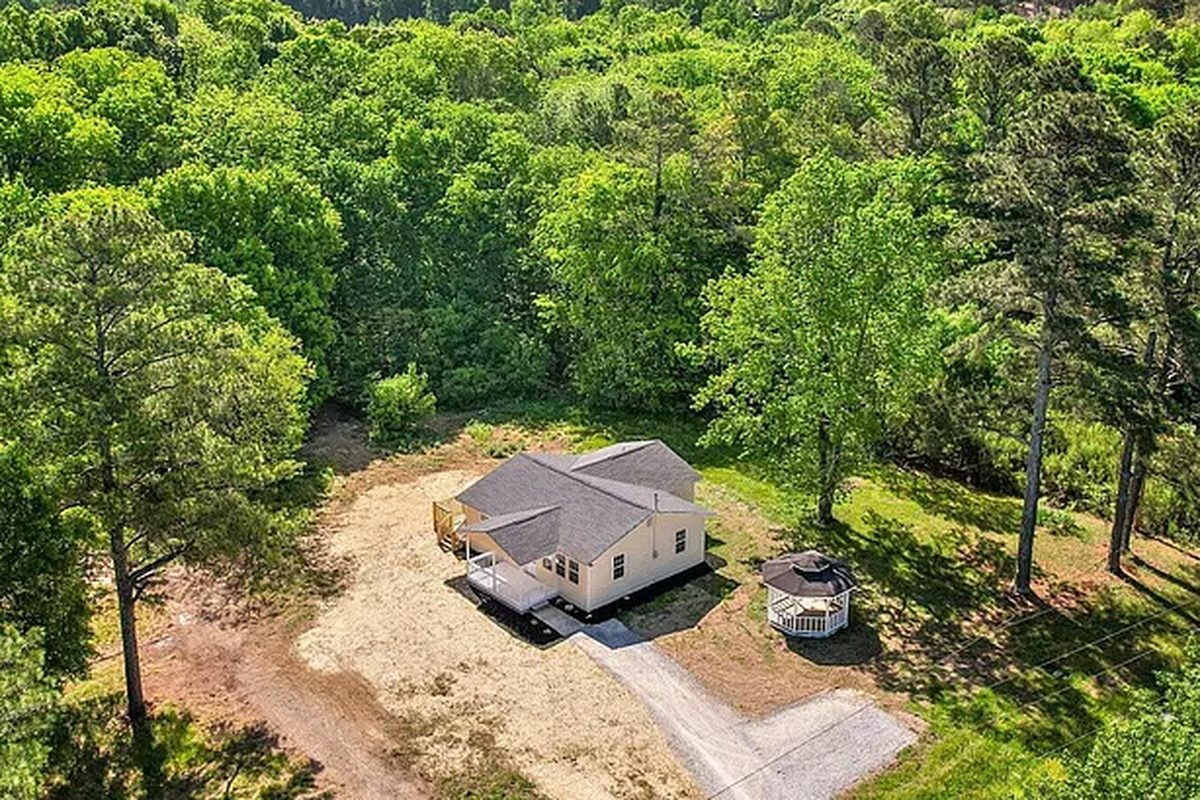
When a parent or relative leaves you a house in Chattanooga, the deed is only part of what you receive. You may also be handed a basement packed with forty years of keepsakes, a roof nobody has looked at since the 1990s, a loan that is still drawing payments, and a group text full of brothers, sisters and cousins who all picture a different ending. We wrote this guide for families standing in exactly that spot.
Buying homes from Hamilton County estates is a regular part of our week. If you have already decided to let the house go, our page on selling an inherited house in Chattanooga covers how we do it. Some families we've helped wanted the keys handed over within ten days; others needed most of a year while a will was argued over in court. Either way, the aim of this article is the same: lay out how Tennessee estate law, the Hamilton County Chancery Court, the tax rules and your selling choices fit together, so nothing catches you off guard halfway through.
Every estate is different, and Tennessee probate rules turn on details like how the deed was worded and whether there is a will. What follows describes the usual path for a Hamilton County estate. Talk with a Chattanooga estate lawyer before you sign anything; plenty of them will do a first meeting at no charge, and we're glad to pass along names of attorneys our sellers have worked with.
First Steps: What to Do Right After Inheriting a Chattanooga Property
Families often put the house on the back burner during the funeral and the weeks after, which is understandable. Still, a handful of tasks can't wait, and they matter whether you end up keeping, renting or selling:
Tennessee Probate: What It Is and How Long It Takes in Hamilton County
Probate is the court process that proves a will (if there is one), puts a personal representative in charge, settles the debts and hands what's left to the heirs. Tennessee's rules for it sit in Title 30 of the state code (Tenn. Code § 30-1-101 et seq.). Here in Hamilton County, estates are handled by the Hamilton County Chancery Court through the Clerk & Master's office in Suite 300 of the courthouse at 625 Georgia Avenue, Chattanooga TN 37402, and probate cases are heard in Part 2 of that court.
Tennessee has a quirk worth knowing. Title to real estate passes to the heirs, or to the people named in the will, the moment the owner dies. That does not mean anyone can sell it the next day. The house stays tied to the estate: creditors can reach it, the court can order it sold to cover debts, and title companies won't insure a sale until someone holds court authority. For a Chattanooga home, that practically means waiting until an estate has been opened and Letters have been issued.
How a Hamilton County Estate Moves Through Chancery Court
For an estate that includes a house, the sequence usually looks like this:
- Open the estate with the Clerk & Master — The named executor, or if there is no will someone qualified under Tenn. Code § 30-1-106 to serve as administrator, files either a Petition for Testate Administration or a Petition for Intestate Administration. Tenn. Code § 30-1-117 spells out what the petition must list, including every heir, legatee and devisee with their address and relationship. The original will is turned in with the petition.
- Receive Letters from the court — The court admits the will and appoints the personal representative, often within a month or two of filing. That person receives Letters Testamentary when there is a will or Letters of Administration when there isn't. The Letters are the proof of authority that banks, title companies and buyers ask for, so order several certified copies.
- Give creditors notice — Notice to Creditors goes out within the first several weeks and is published in a local paper, commonly the Chattanooga Times Free Press. Under Tenn. Code § 30-2-307, claims generally have to be filed within four months of the first published notice, and never later than 12 months after the date of death.
- Inventory and accountings — A will can waive the formal inventory and final accounting, and so can the residuary beneficiaries in writing. Most professionally drafted wills include that waiver. Even then, a Sworn Statement in Lieu of Final Accounting has to be filed.
- Settle the bills — The mortgage, any taxes owed to the Hamilton County Trustee, utility balances, legal fees and properly filed claims are paid from estate funds in the order Tenn. Code § 30-2-317 sets.
- Sell the house if that's the plan — When the will grants the personal representative a power of sale, the house can usually be sold without asking the court first. When it doesn't, the representative petitions Chancery Court for permission to sell. Judges here approve these regularly when the price is fair and every heir or devisee has been notified.
- Distribute and close — After the creditor window passes and the bills are paid, the remaining money goes out under the will or, with no will, under Tennessee's descent and distribution statute (Tenn. Code § 31-2-104). The representative files the final accounting or sworn statement and asks for a discharge order.
What to expect in Hamilton County: six months to a year for a simple estate, and one to two years when the will is challenged, the heirs are at odds, the debts exceed the assets or the holdings are complicated. An estate can't be closed sooner than 4 months after the representative is appointed (Tenn. Code § 30-2-310). A challenge to a will has to be brought within 2 years of the order admitting it (Tenn. Code § 32-4-108).
A lot of families believe the Chattanooga home has to sit untouched until the very last probate order. It doesn't. As soon as the court issues Letters, often a month or two after the petition, the personal representative normally has the authority to sell. With a power of sale in the will, they sign the purchase contract themselves. Without one, they ask Hamilton County Chancery Court for approval, which is routine for a fair-value sale with notice to the heirs. Selling early stops the drain of taxes, insurance and upkeep while the rest of the estate work finishes, and the proceeds simply wait in the estate account.
When You Can Skip (or Shorten) Probate in Tennessee
Some inherited homes never need a full estate administration. Here are four arrangements that can let title move with little or no court involvement, plus the one shortcut that doesn't work for houses:
Living Trust
A house that was deeded into a revocable living trust during the owner's life belongs to the trust, not the estate. The successor trustee named in the trust can list it or sell it to a buyer without opening a Chancery Court case, following whatever instructions the trust lays out. That's why many Chattanooga estate planners steer clients toward trusts: it spares the family the court calendar later on.
Joint Tenancy with Right of Survivorship
When the deed names two or more owners "with right of survivorship," or a married couple owned it as tenants by the entirety, the survivor owns the whole house automatically. No probate is needed. The survivor files a certified death certificate with the Hamilton County Register of Deeds (625 Georgia Ave, Suite 400, Chattanooga TN 37402), which keeps the county's land records, and the title is clean.
Transfer-on-Death (TOD) Deed
Tennessee allows a homeowner to record a transfer-on-death deed under its Uniform Real Property Transfer on Death Act (Tenn. Code § 66-32-101 et seq.). If one was signed and recorded before the owner passed, the named beneficiary takes the house outside the estate by filing an Affidavit of Death and a certified death certificate with the Register of Deeds. A TOD deed only works if it was recorded while the owner was alive; family members can't create one afterward.
Small Estate Probate Act (Personal Property <$50,000)
The state's Small Estate Probate Act (Tenn. Code § 30-4-101 et seq., updated in 2023) offers a quick affidavit for estates holding less than $50,000 in personal property, and the Clerk & Master keeps a Small Estates Act form for it. It does not reach the house. Tenn. Code § 30-4-102(4) states that the small estate affidavit "is not muniment of title for real estate." It's useful for a bank account or a car, but a Chattanooga home will still need full administration or one of the three routes above.
Multiple Heirs: What Happens When Family Disagrees
Nothing stalls a Hamilton County estate like relatives who can't agree. If the house passed to several people together, a normal sale needs every one of their signatures, and a single person who refuses can freeze the whole thing for months or years.
These are the four situations we see most:
"When a family sits down and adds up what the empty house is costing each month, most standoffs end. Nobody wants to learn they gave away thousands just by waiting."
— Chad Bonawitz, Dignity PropertiesTax Implications of Selling an Inherited Chattanooga Home
Heirs worry about taxes more than almost anything else, and in Tennessee the news is mostly good. Here's what actually applies when you sell a house you inherited here:
Stepped-Up Basis: Why the Original Price Doesn't Matter
For federal capital gains, an heir's starting value is reset to what the house was worth on the day the owner died, not the price the owner paid decades ago. The rule comes from IRC § 1014, and for families selling a long-held home it can erase most or all of the taxable gain.
Here's how that plays out. Say your mother bought her Brainerd ranch for $68,000 in 1991 and it was worth $214,000 the week she passed. Your basis is $214,000. Sell it four months later for $220,000 and the federal gain is about $6,000, not the roughly $152,000 she would have reported had she sold it herself. Sell close to the date-of-death value and the gain may be zero.
| Tax Question | Answer for Tennessee Inherited Property |
|---|---|
| Federal capital gains tax | Owed only on any increase above the stepped-up basis (IRC § 1014). Inherited property is always treated as held long term, so the 0%, 15% or 20% rates apply even if you sell within weeks. |
| Tennessee state income tax on sale proceeds | None. Tennessee taxes no wages or capital gains, and the Hall tax on interest and dividends ended in 2021. The state takes nothing from the sale itself. |
| Tennessee estate tax | None. The state estate tax was repealed as of January 1, 2016, for estates of any size. |
| Tennessee inheritance tax | None. The inheritance tax went away on the same date, January 1, 2016, so receiving the house costs you nothing at the state level. |
| Federal estate tax | The 2026 federal exemption is $15 million per person, or $30 million for a married couple using portability. Only a tiny share of estates nationwide owe it. |
| Delinquent property taxes | Paid off at closing, since unpaid county taxes stay attached to the property no matter who inherits it. Get the balance from the Hamilton County Trustee, the county's tax collector: (423) 209-7270, 625 Georgia Ave, Suite 210. |
| Tennessee real estate transfer tax | Charged when the deed is recorded at $0.37 per $100 of the price, roughly $1,110 on a $300,000 sale. Tennessee law puts it on the buyer, though a contract can shift it. |
Your stepped-up basis is only as good as your proof of it. A licensed appraisal dated as of the date of death is the strongest record; for a lower-priced house, some accountants will accept a broker price opinion instead. Skip this step and you may have a hard time defending your basis if the IRS ever asks. In the Chattanooga area a home appraisal typically costs a few hundred dollars, which is cheap protection.
Dealing with Deferred Maintenance and Decades of Belongings
Almost every inherited home we walk through in Hamilton County has the same two challenges: repairs that piled up quietly, and rooms full of a lifetime's possessions. Heirs face both while they're grieving and juggling court paperwork, which is a lot to ask of anyone.
What Usually Needs Work
When someone lives in the same house for a few decades, especially in their later years on a fixed income, small fixes get postponed and become big ones. It's rarely carelessness; it's just hard to keep up. In the older housing around Chattanooga, these are the problems we run into most:
A cash sale doesn't require fixing any of that. Dignity Properties buys houses in whatever shape they're in; some we've bought needed $80,000 or more in work. We figure the repairs into the price, and the estate never pays a contractor. Fixing the house up before listing means putting up money, waiting on crews and supervising the job, often from another city, which many heirs just can't do.
All Those Belongings
The sheer amount of stuff surprises most families. A home lived in since the 1970s can hold half a century of furniture, dishes, clothes, Christmas boxes, tools in the garage and papers in every drawer. Deciding what to keep, who gets the china and what to do with the rest often takes more out of people than the court process does.
Ways families around Chattanooga typically clear a house:
- Estate sale companies: Several established local firms will price, advertise and run a public sale in exchange for a share of what sells, often in the 30–40% range. You'll come out ahead of donating, though not as far ahead as selling the best pieces yourself.
- Donation pickup: The Habitat for Humanity ReStore serving the Chattanooga area accepts furniture and building materials, and Goodwill and the Salvation Army schedule pickups for household goods and clothing.
- Junk haulers: National chains and local Chattanooga crews can empty a house in a day or two, usually for somewhere between $500 and $2,000 depending on how much is inside. Quick and tidy, but you recover nothing.
- Sell the house with the contents: We'll buy the home with everything still in it. Take the photos, the quilts and whatever else matters, and leave the rest; the clean-out becomes our job. For heirs who are worn out or live far away, it's the least effort of any option.
Inherited a House You Can't Deal With Right Now?
Take what you want and leave the rest behind. We cover the clean-out, the repairs and the closing paperwork, and the estate gets paid in 14–21 days.
Your Selling Options: What Actually Works in Chattanooga
After the personal representative has authority and the family has settled on selling, there are three practical ways to sell an inherited house in the Chattanooga area:
The buyer takes the house exactly as it stands, pays the closing costs and closes in 14–21 days, with no showings, no staging and no repair list. When the proceeds are being split several ways, a quick and certain closing is frequently worth more to the family than a slightly higher number that takes four to six months to reach.
Why it helps estates: the sale can happen while probate is still open, once the representative has authority or court approval. Cash buyers are also used to liens, years of deferred repairs and title wrinkles that tend to sink a financed sale.
A well-kept house in one of the area's more sought-after neighborhoods, or one that only needs light work to get there, can bring more on the open market than from a cash buyer. The trade-off is two to four months of holding costs, paying for repairs before the listing goes live, and the risk that a deal falls apart over an inspection, a low appraisal or a buyer whose loan gets denied.
Think twice if: the repair estimate tops $10,000–$15,000, comparable sales nearby are weak, or monthly bills are already draining the estate account.
Fixing up an inherited house to sell for top dollar looks great on paper and disappoints in practice more often than not. Kitchens and baths rarely give back what they cost, particularly in modest older neighborhoods where buyers' budgets have a ceiling. Then add three to six months of holding costs while work drags on, the job of managing tradespeople and the risk of surprises behind the walls, and the margin for most estates gets very thin.
Where it can work: light cosmetic work like fresh paint, new flooring and updated fixtures on a solid house in Hixson or North Chattanooga. A full gut renovation almost never pays off for an estate.
Frequently Asked Questions
Do I have to go through probate to sell an inherited house in Tennessee?
Usually, though not in every case. A home held in a living trust, owned with right of survivorship, owned by a married couple as tenants by the entirety, or covered by a transfer-on-death deed recorded before the owner died passes without probate. The Small Estate Probate Act (Tenn. Code § 30-4-101 et seq.) is quick and cheap, but it does not cover real estate. If the house was in the deceased person's name alone with no trust or TOD deed, plan on a full estate in Chancery Court. The good news is that the sale can happen as soon as Letters Testamentary or Letters of Administration are issued, long before the estate is closed.
How long does probate take in Hamilton County?
Plan on six months to a year for a simple estate and a year or two, sometimes longer, when the will is contested or the assets are complicated. Tennessee keeps an estate open at least 4 months after the personal representative is appointed (Tenn. Code § 30-2-310), and creditors can have up to 12 months from the date of death to file. Hamilton County estates are handled by the Chancery Court, Suite 300, 625 Georgia Avenue. The house itself can usually be sold once Letters are issued, often a month or two after filing, while the estate stays open for the creditor period and the final paperwork.
Do I owe taxes when I sell an inherited house in Chattanooga?
Not to the state. Tennessee repealed its inheritance and estate taxes on January 1, 2016, and it does not tax wages or capital gains. Federally, your basis resets to the home's value on the date of death under IRC § 1014, so you'd only owe on any rise in value after that date; sell soon and near that value and there may be nothing to report. The federal estate tax only reaches estates above $15 million per person in 2026. The one state charge at closing is the transfer tax of $0.37 per $100 of the price. If the home has gained a lot since the date of death, run the numbers with a CPA.
What if my siblings and I can't agree on selling?
Any co-owner can ask Hamilton County Chancery Court to partition the property under Tenn. Code § 29-27-101 et seq. With a single-family house, the court almost always orders a sale and splits the money by ownership share rather than dividing the land. Partition takes a year or more, costs each side thousands in legal fees and tends to leave lasting hard feelings. Most families find a way through once they total up what the empty house costs every month in county taxes, vacancy insurance, utilities and upkeep. A mediator or an estate lawyer can sometimes break a stalemate the family can't break on its own.
Can I sell an inherited Chattanooga home if it has a mortgage?
Yes. The federal Garn-St. Germain Depository Institutions Act of 1982 bars a lender from calling the loan due just because the owner died and a relative inherited the home they lived in. You can keep paying, refinance into your own name, or sell and let the payoff come out of the proceeds at closing. If nobody keeps the payments current while the estate is open, Tennessee's trustee-sale foreclosure can move fast, often around five or six months from the first missed payment to the sale date. If the loan is larger than the house is worth, the lender may need to approve a short sale, so get an estate lawyer involved early.
What if the inherited home has delinquent property taxes in Chattanooga?
Back taxes owed to Hamilton County stay attached to the property and are paid from the sale at closing. The Hamilton County Trustee, which collects county property taxes, can give you the exact figure: (423) 209-7270, 625 Georgia Ave, Suite 210. County taxes are payable from October 1 through the end of February and start adding 1.5% interest per month on March 1. A cash buyer builds the balance into the offer and pays it at closing, so you don't have to come up with the money first. Delinquent-tax sales in Hamilton County are run through the Chancery Court Clerk & Master, so if you've received notice of a tax sale suit, call a lawyer right away.