It usually starts with a door that will not latch.
Then a stair-step crack shows up in the brick by the garage, a diagonal crack opens above a bedroom doorway, and a marble set on the kitchen floor rolls toward the same corner every time. Somebody says the word "foundation," and suddenly a house you were planning to sell next spring feels like a house nobody will buy.
That fear is understandable and mostly wrong. Houses with foundation problems sell in Hamilton County all the time. What changes is who can buy them, what you are legally required to tell that buyer, and how much of the problem you pay for versus how much the buyer prices in. Around Chattanooga there is a second question layered on top — whether the ground under the house is the problem, not the concrete — because this part of Tennessee sits on rock that dissolves.
This guide walks through what counts as a real structural problem, the disclosure rules that apply (including the sinkhole disclosure no as-is disclaimer waives), why financed buyers stall, what Tennessee sinkhole coverage actually pays for, and the four realistic ways to sell.
Whether a crack is cosmetic or structural is a question for a licensed structural engineer, not a blog post. Disclosure obligations turn on what you actually know, and insurance coverage turns on your specific policy. Use this to know which questions to ask, then confirm them with an engineer, your insurance agent and, if you are unsure what to disclose, a Tennessee real estate attorney.
Why This Comes Up So Often Around Chattanooga
Most of the country only thinks about sinkholes when one swallows a car on the news. In Tennessee they are part of the landscape. Karst terrain forms where rainfall is plentiful and the bedrock is carbonate rock like limestone or dolomite, and the Tennessee Emergency Management Agency lists sinkholes as the hazard most associated with it — they form when the roof of a cave becomes too thin to hold the weight above it, or when water enlarges a fracture in the limestone.
How common is that here? Tennessee Tech's Tennessee Landforms project counted more than 54,000 sinkholes visible on the state's USGS topographic maps, found at least one in 85 of Tennessee's 95 counties, and estimates the real number is several times higher because the maps only show the ones visible from aerial photography. The project's own summary is blunt: Tennessee sits atop a karst corridor.
None of that means your house is sitting on a sinkhole. Far more foundation trouble around Chattanooga comes from ordinary causes — water that drains toward the house instead of away from it, fill soil that was never properly compacted, clay that swells and shrinks with the seasons, and framing that has rotted from years of moisture in a crawlspace. But it does mean that when a Hamilton County house starts moving, a careful buyer, lender or engineer is going to ask the karst question, and you should be ready for it.
Hillside lots add their own version of the problem. On the slopes of Signal Mountain, Lookout Mountain and the ridges running through the city, the concern is less a void opening underneath and more soil and fill moving downhill, especially where drainage has been neglected. Tennessee's disclosure form treats that as its own question, which we will get to.
Settling, Cracks and Real Structural Damage
Every house settles. Hairline cracks in a poured basement wall or a slab are common in homes of any age and often mean nothing more than concrete doing what concrete does. The things that make engineers lean in are different:
- Cracks that are wide, growing, or offset — one side of the crack sitting higher or further out than the other.
- Stair-step cracking in brick or block, particularly near the corners of the house.
- Doors and windows that stick or will not latch after years of working fine, and gaps opening between walls and ceilings or floors.
- Sloping or bouncy floors, which in a crawlspace house frequently trace back to failing piers or rotted joists rather than the footing itself.
- A wall that bows or leans in a basement, usually from soil and water pressure on the outside.
- A new depression in the yard, or arch-shaped cracks in the soil — two of the warning signs TEMA tells buyers to look for around a property in karst country.
Tennessee's insurance statute draws a useful line here, even if you never file a claim. It defines structural damage as foundation movement serious enough to leave floors or primary structural members unfit for service or a safety hazard, or to get the house condemned — and it expressly says that cracking, shrinking or expansion without structural damage is not a sinkhole loss. That is roughly how buyers think about it too: cosmetic cracking is a negotiating point, structural damage is a financing and safety problem.
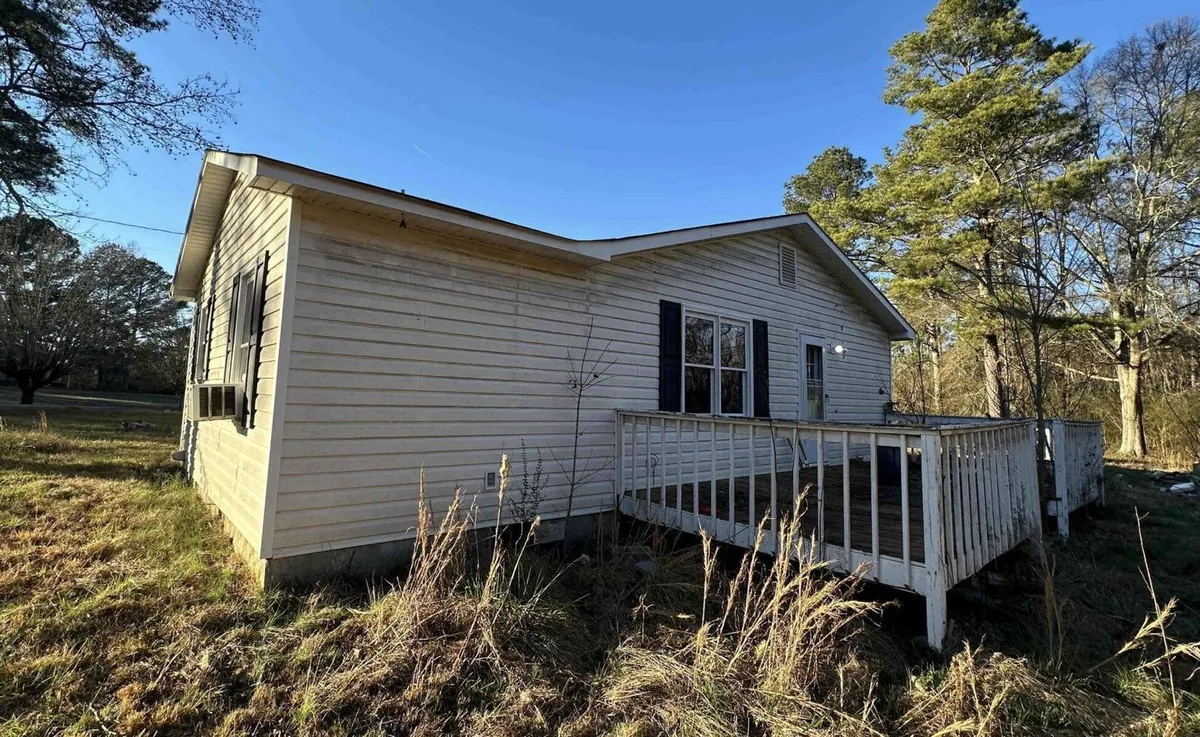
Our own Harrison, TN purchase is a good example of the second kind. The HVAC had died, but what made the house nearly impossible to sell on the open market was the floor system — the joists were so rotted that every one of them had to be cut out and the subfloor structure rebuilt from scratch. A buyer using a mortgage could not have closed on it in that condition.
What Tennessee Makes You Disclose
Tennessee's Residential Property Disclosure Act requires a seller of a one-to-four-unit home to give the buyer a disclosure statement, a disclaimer statement, or an exemption form before closing. (Our guide to selling a house as-is in Chattanooga walks through all three.) On the standard Residential Property Condition Disclosure, a house with foundation trouble runs into several questions at once:
- Defects or malfunctions in the foundation, slab, basement, floors, interior walls, exterior walls, driveway or sidewalks.
- "Any settling from any cause, or slippage, sliding or other soil problems?"
- Landfill, compacted or otherwise, on any portion of the property.
- Flooding, drainage or grading problems — often the actual cause of the movement.
- "Property or structural damage from fire, earthquake, floods or landslides?" — followed by whether that damage has been repaired.
- Structural modifications, alterations or repairs made without necessary permits, or not in compliance with building codes.
You answer those from what you actually know. Tennessee law does not require a seller to hire an inspector or go looking for defects, and "unknown" is a legitimate answer when it is true. But knowledge is broader than people assume. If you had a foundation company out two years ago, if you have an engineer's letter in a drawer, if the previous owner told you about the pier work — that is knowledge, and the form is where it goes.
A cash buyer will often sign the disclaimer statement and waive the full form. That waiver does not reach everything. Tenn. Code § 66-5-212 separately requires the seller to disclose any known sinkhole on the property — defined as a subterranean void created by the dissolution of limestone or dolostone strata from groundwater erosion, causing the surface to subside — and whether the home has been moved from its original foundation. Those disclosures apply whichever form you sign. If you know, write it down.
The cost of getting this wrong is real. A buyer who closes on a misrepresented disclosure form can sue for actual damages under Tenn. Code § 66-5-208 (within one year of receiving the disclosure or closing, whichever comes first), and willful concealment of a known defect is a problem no disclaimer fixes. A foundation issue that is disclosed and priced in is a negotiation. The same issue discovered after closing is a lawsuit.
Why Financed Buyers Stall
The biggest practical effect of a foundation problem is not on the price. It is on the buyer's loan.
HUD's single-family handbook sets minimum property requirements for every home FHA insures, and the core of them is that the home be safe, sound and secure. An appraiser who sees active structural movement is not in a position to call a house sound, and the usual result is a condition that the problem be repaired — or an engineer certify it — before the loan can close. Conventional and VA lenders run their own versions of the same logic. In the buyer pools that matter most for typical Hamilton County homes, a visible foundation defect turns "we have an offer" into "we have an offer if the seller fixes this first."
| Buyer type | Can they close with an unrepaired structural problem? | What they usually ask for |
|---|---|---|
| FHA / VA buyer | Rarely — the appraisal has to clear minimum property standards | Repair before closing, or an engineer's letter the lender accepts |
| Conventional buyer | Sometimes, depending on the lender and the appraisal | An engineer's report, a repair credit, or a price reduction |
| Cash owner-occupant | Yes, if they are comfortable with the risk | A steep discount and time for their own inspections |
| Cash investor | Yes — it is the job | A price that covers the repair and the risk; no repair requests |
That is why foundation houses tend to sit on the MLS. The listing gets showings, a financed buyer falls in love with the kitchen, the inspection finds the movement, and the deal either dies or comes back with a repair demand. Each round costs you another month of mortgage, taxes, insurance and utilities — the same carrying costs we break down in cash buyer vs. realtor in Chattanooga.
Foundation Problem Stalling Your Sale?
What Sinkhole Insurance Actually Covers in Tennessee
A lot of Chattanooga homeowners assume their policy covers the ground opening up. Tennessee law is specific about this, and it is worth reading before you plan around an insurance check.
Under Tenn. Code § 56-7-130, every insurer selling homeowner policies in Tennessee must make sinkhole loss coverage available — but the statute says in so many words that nothing in it requires that coverage to be included in the policy. It is optional coverage the policyholder asks for, the insurer may charge extra for it, and the insurer can inspect the property before agreeing to write it. If you never added it, you probably do not have it.
If you do have it, the definitions are narrow:
- A covered sinkhole loss is structural damage caused by the sudden collapse of the earth supporting the house as a result of sinkhole activity.
- Land stabilization is excluded — the statute carves out the cost of stabilizing the ground itself.
- Cracking, shrinking or expansion without structural damage is not a sinkhole loss.
- The repair has a schedule. Once the insurer confirms coverage, the policyholder has 90 days to sign a contract for stabilization and foundation repairs following an engineer-approved plan, and the work generally has to be completed within 12 months. Until that contract is signed, the insurer can limit payment to actual cash value, excluding the stabilization and foundation repair costs.
Here is the part sellers miss. The same statute lets an insurer cancel, refuse to renew, or refuse to write a policy on a house that has had a sinkhole claim if it was not repaired according to the approved plan and timeline, or if it remains at risk because of unstable land. Your buyer needs a homeowner's policy to close, and their lender needs it too. A claim that was filed and never properly finished can follow the house into the next owner's insurance application.
Get the Diagnosis Before You Get Bids
The single most useful document when selling a house that is moving is an independent structural engineer's report — not a free inspection from the company that wants to sell you the piers. The engineer's job is to tell you what is moving, why, and what the fix is. The contractor's job is to sell a fix. You want the first before you invite the second.
Where karst is a possibility, TEMA's guidance is to bring in both a professional geologist with experience identifying karst and an engineer experienced in sinkhole remediation — the same two disciplines Tennessee's insurance statute relies on to decide whether damage was caused by sinkhole activity at all.
Two honest caveats. First, a report makes the problem known, and what you know goes on the disclosure form. That is not a reason to skip it — a buyer's inspector will find the same cracks, and a seller with a professional diagnosis and a written repair scope negotiates from a far better position than one with a shrug. Second, the report is also what tells you whether you are looking at a drainage correction and some piers, or at a problem large enough that repairing before sale no longer makes sense.
Repairs, Permits and the Question on the Form
If you decide to repair before selling, do it with a permit. Structural foundation work inside city limits generally runs through the City of Chattanooga's Land Development Office, which handles residential building permits, plan review and inspections; outside the city, check with the county or your municipality before work starts.
The reason matters for the sale, not just the code. The disclosure form asks directly whether any structural modifications or repairs were made without necessary permits, and whether any were made out of compliance with building codes. A cash-paid, unpermitted pier job that looked like a savings at the time becomes a "yes" on that line — and a question every buyer's agent will ask about. A permitted repair with an engineer's sign-off and a transferable warranty, by contrast, is something you can hand a buyer with confidence. If there is already unpermitted work on the house, our page on selling a house with code violations covers how that plays out.
Drainage is part of this too. Engineers frequently trace foundation movement back to water — gutters dumping at the footing, a yard graded toward the house, a crawlspace that stays wet. If the house has taken water from outside, our guide to selling in a Chattanooga flood zone covers the separate flood questions on the same form.
Your Four Real Options
A permitted repair with an engineer's final letter and a transferable warranty reopens the financed buyer pool and lets you list at something close to full market value.
The tradeoff: You fund the repair up front, you still disclose the history, and some buyers discount a repaired foundation anyway. Get the engineer's scope before you commit, so the bid is measured against a diagnosis.
Complete the disclosure honestly, put the engineer's report and repair estimate in the listing packet, and price with the repair already subtracted. Serious buyers can then make a decision instead of discovering the problem mid-contract.
The tradeoff: Financed buyers may still hit an appraisal or lender wall, so expect longer market time and a higher chance of a deal falling through.
No lender means no appraisal condition and no repair demand. A cash buyer prices the repair into the offer and takes on the construction — which is exactly what we did on the Harrison house, rebuilding the entire floor system after closing. Our as-is buying page explains how we handle these.
The tradeoff: The offer will be lower than a repaired retail price. The question is whether it is lower than what you would net after repairs, carrying costs and concessions.
If the claim is covered, the insurer pays for repairs as the work is performed under an approved plan. A completed, documented repair is far easier to sell than an open claim.
The tradeoff: Time. The 90-day contract window and the 12-month completion window run on the insurer's schedule, not yours — and a claim left unfinished can make the house harder for the next owner to insure.
The honest counterweight we give on every one of these pages applies here too: if the problem is small, the diagnosis is clear, and you have the time and equity to fix it properly, repairing and listing will usually put more money in your pocket than any cash offer. We will tell you that when it is true.
What to Do This Week
- Document what you see. Photograph the cracks with a tape measure in the frame and a date, so you can tell whether they are moving.
- Pull your insurance declarations page. Look for a sinkhole endorsement. If it is not there, assume you do not have the coverage and call your agent to confirm.
- Gather what you already know. Old inspection reports, foundation company visits, warranties, permits — all of it bears on the disclosure form.
- Hire an independent engineer before you collect repair bids, and add a geologist if a sinkhole is a realistic possibility.
- Price both paths. Repair-and-list against as-is, with carrying costs included. Get a cash offer even if you plan to list, so you know the floor.
More questions are answered on our FAQ page, and how it works walks through our process from first call to closing.
Frequently Asked Questions
Can I sell a house with foundation problems in Chattanooga?
Yes, and people do it every week — the question is who the buyer is. A foundation problem does not make a house unsellable; it narrows the pool of buyers who can close on it. Most financed buyers need a lender and an appraiser to sign off on the property, and FHA's minimum property requirements say a home must be safe, sound and secure, so an active structural problem tends to stall or kill those deals until it is repaired. Your realistic paths are to repair first and list, to list as-is with a professional report and price for the problem, or to sell to a cash buyer who takes on the repair. Which one nets you more depends on the size of the repair, how much equity you have, and how long you can carry the house.
Do I have to disclose foundation problems when I sell in Tennessee?
If you know about them, yes. The Tennessee Residential Property Condition Disclosure asks directly about defects in the foundation, slab, basement, floors and walls; about any settling from any cause, slippage, sliding or other soil problems; about structural modifications or repairs made without the necessary permits; and about property or structural damage from landslides, including whether it was repaired. You answer from your actual knowledge and the law does not require you to hire an inspector, but a structural engineer's report you already have is knowledge. Hiding a defect you know about is how a closed sale turns into a lawsuit.
Does signing an as-is disclaimer mean I don't have to mention a sinkhole?
No. Tennessee lets a buyer waive the full disclosure form, but Tenn. Code § 66-5-212 requires the seller to disclose a known sinkhole regardless of which form is used — and the same section covers a house that has been moved from its original foundation. The statute defines a sinkhole as a subterranean void created by the dissolution of limestone or dolostone strata resulting from groundwater erosion, causing a surface subsidence of soil, sediment or rock. If you know about one on the property, put it in writing.
Will homeowners insurance pay for sinkhole damage in Tennessee?
Only if you bought the coverage. Under Tenn. Code § 56-7-130, every insurer selling homeowner policies in Tennessee must make sinkhole loss coverage available, but the law does not require it to be included in the policy — it is optional coverage purchased on request, and the insurer may inspect before issuing it. Even when you have it, a covered sinkhole loss means structural damage from the sudden collapse of the ground under the house; land stabilization is excluded, and cracking or settling without structural damage is not a sinkhole loss. Read your declarations page before you assume anything.
Will Dignity Properties buy a house with a cracked foundation or sinkhole?
Yes. We buy Chattanooga-area houses with settling, cracked slabs, failing piers, rotted framing and known sinkholes, as-is, with no repairs and no inspection contingency. We price the repair into our offer and show you how we got there, and you are free to compare it against listing. If the repair is small and you have time and equity, we will tell you listing is probably the better move. Call us at (423) 212-8384 and we will walk the house and give you a written number.